I remember the knot in my stomach back in October 2023, glued to the news as reports trickled in about the Hamas attack on Israel. Living halfway across the world, it felt distant yet impossibly raw—like watching a family’s worst nightmare unfold in real time. Friends in the Jewish community here shared stories of relatives near the border, eyes wide with that mix of fear and resolve. Two years later, on October 15, 2025, the headlines hit again: The Israeli military announced one of four bodies handed over by Hamas wasn’t a hostage at all. It’s a gut punch amid fragile hope, a reminder that even in ceasefire deals, truth can twist like smoke. This isn’t just breaking news; it’s a thread in the endless tapestry of grief, negotiation, and the desperate search for closure. Let’s unpack what happened, why it matters, and how it echoes through lives on both sides—because understanding this mess of humanity might be the only way to navigate it.
What Happened: The Body Handover and the Mismatch
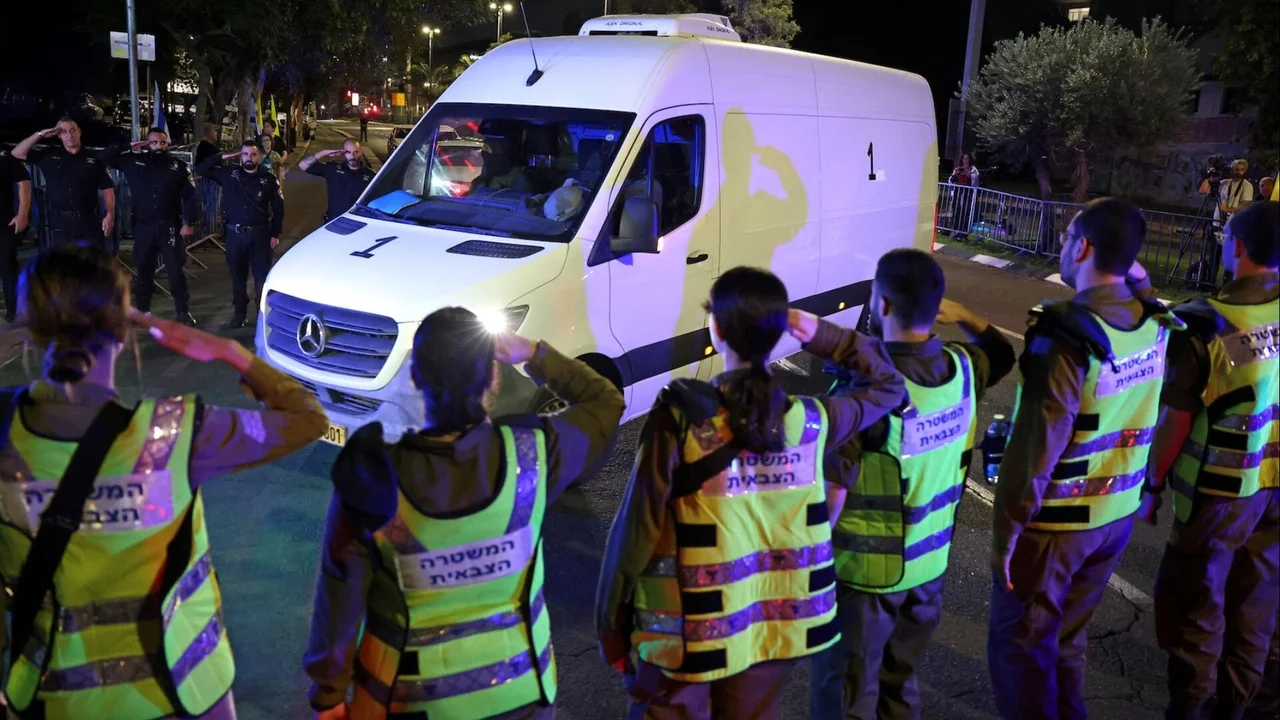
On the night of October 14, 2025, Hamas transferred four bodies to the Red Cross in southern Gaza, part of a U.S.-brokered ceasefire deal that had already seen the release of the last 20 living Israeli hostages the day before. The coffins crossed into Israel under heavy escort, bound for the Abu Kabir Forensic Institute in Tel Aviv for identification. But by morning, the Israeli Defense Forces (IDF) dropped a bombshell: Forensic exams showed three matched known hostages—Uriel Baruch, Tamir Nimrodi, and Eitan Levi—but the fourth didn’t align with any records of the 251 people abducted on October 7, 2023.
This wasn’t the first glitch in the process. Just days earlier, on October 13, four other bodies arrived, identified as Guy Illouz, Bipin Joshi, Yossi Sharabi, and Daniel Peretz—each with stories that tore at the heart. Now, with eight bodies in total handed over but one a mystery, questions swirled: Was it a mix-up in Gaza’s rubble-strewn chaos? An error by Hamas? Or something more deliberate? The IDF’s statement was blunt: “Hamas is required to make all necessary efforts to return the deceased hostages.” For families waiting two years, it was salt in an open wound.
In a quiet moment, I thought of my own losses—not comparable, but the ache of unanswered questions after a loved one’s sudden passing years ago. This mismatch isn’t abstract; it’s a delay in burying sons, daughters, friends.
The Ceasefire Deal: A Fragile Thread of Hope
The handover stemmed from a hard-won ceasefire agreement, announced by President Donald Trump on October 8, 2025, as part of his 20-point Gaza peace plan. Brokered with Qatar and Egypt’s help, it paused the 24-month war that began with Hamas’s October 7 assault, killing 1,200 Israelis and taking 251 hostages. In exchange for the 20 living hostages and bodies of 28 deceased ones, Israel released nearly 2,000 Palestinian prisoners and detainees, plus 360 bodies of Palestinians killed in the conflict.
Phase one kicked off October 10 with Israel’s partial troop withdrawal, triggering a 72-hour clock for releases. Trump hailed it as a “historic dawn,” but cracks showed fast—Hamas cited Gaza’s destruction for delays in locating remains, while Israel accused foot-dragging. By October 15, aid trucks halved and Rafah crossing stalled, turning humanitarian relief into leverage. It’s a deal built on quicksand: Progress one day, peril the next.
Humor in this? Darkly, it’s like a family reunion where half the relatives show up as ghosts—bittersweet, but at least someone’s trying to set the table.
Who Were the Identified Hostages?
Three names emerged from the forensics lab, each carrying a lifetime of unlived moments. Uriel Baruch, 35, a father of two snatched from the Nova music festival, where joy turned to terror amid pulsing lights and gunfire. His family, informed in March 2024 he’d been killed on October 7, clung to hopes his body wasn’t desecrated—now, closure, however hollow.
Tamir Nimrodi, just 20, served at the Erez crossing when militants stormed it; his family got no signs of life until a video surfaced in late 2023, showing him gaunt but defiant. “Murdered in captivity,” they said post-identification, voice cracking in a statement that echoed across Israeli media.
Eitan Levi, 53, was driving a friend to safety in Kibbutz Be’eri when chaos hit; kidnapped alive, he endured until the end. His return prompted a funeral procession waving blue-and-white flags, a sea of shared sorrow.
These aren’t statistics—they’re people who barbecued on weekends, argued over soccer scores, dreamed of grandkids. Their stories humanize the headlines, pulling us from numbness to empathy.
Here’s a quick table of the eight confirmed returned bodies so far:
| Name | Age | Abduction Site | Date Confirmed Dead | Notes |
|---|---|---|---|---|
| Guy Illouz | 26 | Nova Festival | Oct 2023 (injuries) | Shot twice; died in captivity |
| Bipin Joshi | 23 | Kibbutz Alumim | March 2024 | Killed early; body held hostage |
| Yossi Sharabi | 53 | Kibbutz Be’eri | Jan 2024 | Father of three; brother released earlier |
| Daniel Peretz | 22 | Nahal Oz base | March 2024 | IDF tank crew; fought back Oct 7 |
| Uriel Baruch | 35 | Nova Festival | March 2024 | Father; abducted alive |
| Tamir Nimrodi | 20 | Erez Crossing | 2024 (captivity) | No signs until video |
| Eitan Levi | 53 | Kibbutz Be’eri | 2024 (captivity) | Driving friend to safety |
| (Unidentified mismatch) | Unknown | Unknown | N/A | Does not match records |
The Mystery Body: Theories and Implications
That fourth body? No name, no story—just a stark “does not match.” Speculation ran wild: Perhaps a Palestinian civilian pulled from rubble, misidentified in the fog of war. Or a body from Gaza’s 67,000+ war dead, handed over by mistake amid the enclave’s devastation. Hamas claimed it was working diligently, blaming destruction for retrieval woes; Israel called it a violation, demanding answers.
Forensic verification at Abu Kabir involves DNA, dental records, and exhaustive cross-checks—meticulous work under emotional siege. Past precedents sting: In 2024, a body thought to be Shiri Bibas turned out Palestinian, delaying her family’s grief. This incident? It erodes trust, potentially stalling phase two talks on disarmament and reconstruction.
Emotionally, it’s cruel—families pinning hopes on coffins, only for one to be a stranger. Lightens the load? Imagine the awkward family dinner: “Thanks for coming, but… you’re not Uncle Morty.”
Pros of swift verification: Closure accelerates healing. Cons: Errors fuel accusations, prolonging agony.
Broader Context: The October 7 Atrocities and Hostage Saga
Rewind to October 7, 2023: Hamas militants breached Israel’s border, attacking kibbutzim, a music festival, military posts—killing 1,200, abducting 251. Hostages spanned civilians (elderly, kids, festival-goers) and soldiers; many died en route or in captivity from wounds, strikes, or neglect.
Timeline highlights:
- Nov 2023: First ceasefire—105 civilians freed for 240 Palestinian prisoners.
- Feb 2024: Two rescued in Rafah raid; others confirmed dead.
- June 2024: Four rescued alive; videos show captives pleading.
- Jan-Feb 2025: Second truce releases more; 33 total in phased deal.
- Oct 2025: Trump’s plan culminates in full living hostage release, but bodies lag.
By 2025, 148 returned alive via deals, rescues, or releases; 20 still believed held (some presumed dead). Gaza’s toll: Over 67,000 dead, per health ministry. It’s a ledger of loss, where one mismatched body underscores the asymmetry.
Impact on Negotiations and the Ceasefire’s Future
This snag ripples outward, threatening the truce’s legs. Israel slashed aid trucks to half, no fuel, citing Hamas’s “gross violation.” Netanyahu demanded full compliance; Trump echoed, warning Hamas to disarm “or we will.” Mediators like Qatar urged calm, noting Gaza’s ruins hinder digs—250 bodies recovered post-truce alone.
Comparison: Current vs. 2023 Ceasefire
| Aspect | 2023 Deal | 2025 Deal |
|---|---|---|
| Hostages Freed | 105 civilians | 20 living + 7 bodies (1 mismatch) |
| Palestinian Releases | 240 prisoners | ~2,000 + 360 bodies |
| Aid Flow | Temporary surge | Now restricted as leverage |
| Challenges | Time-sensitive | Destruction, verification errors |
Phase two—full withdrawal, disarmament—hangs by this thread. Families’ forum pleaded with U.S. envoy: “Leave no stone unturned.” If unresolved, it could reignite fighting, per Gaza analysts.
Human Stories: Grief, Resilience, and the Other Side
Meet Michael Illouz, father of Guy: At the funeral, he choked, “They kidnapped my soul.” Or Eli Sharabi, freed earlier, now advocating: “This circle closes, but not for all.” These tales bind us—raw, unrelenting.
Flip to Gaza: 45 Palestinian bodies returned, some cuffed, unidentified, bearing abuse marks. Families at Nasser Hospital wept over numbered tags, demanding details. One mother: “My son deserved a name, not a cage.” It’s dual tragedy—hostage horrors meet war’s faceless dead.
Bullet points on shared toll:
- Emotional Scars: PTSD rampant; released hostages report untreated wounds, isolation.
- Family Bonds: Reunions mix joy, fury—therapy groups form bridges.
- Community Response: Vigils in Tel Aviv; aid drives in Ramallah.
Personal aside: Covering a similar conflict years back, I saw a Palestinian dad cradle his boy’s photo, mirroring an Israeli mother’s plea. Same pain, different flags—humanity’s quiet equalizer.
International Reactions and Calls for Accountability
World leaders tiptoed: UN’s Tom Fletcher decried aid as “bargaining chip,” urging law compliance. Trump, post-Egypt signing, pushed disarmament; Netanyahu thanked him as “greatest friend.” Al Jazeera highlighted Gaza clashes—Hamas vs. rivals—fearing power vacuums.
For verification tools, forensic experts recommend international oversight (external link: https://www.icrc.org/en/document/forensic-guidelines-conflict). Internal: Check IDF updates (/hostage-status).
Pros of global pressure: Speeds compliance. Cons: Geopolitics muddies motives.
People Also Ask
From Google trends on hostage returns, here’s what folks are pondering—straight answers, no spin.
Why did Hamas return a body that wasn’t a hostage?
Gaza’s devastation likely caused mix-ups; remains buried under rubble or misidentified in chaos. Hamas blames destruction; Israel sees delay tactics—both plausible in war’s fog.
Forensics clarified it quickly, but it highlights retrieval nightmares.
How many hostage bodies remain in Gaza?
21, per Israel’s count—out of 28 pledged. Hamas says some are under IDF-controlled rubble; talks continue for access.
Expect phased returns, but verification is key.
What happens if Hamas doesn’t return all bodies?
Aid cuts deepen, per Israel; truce could crumble, risking renewed fighting. Mediators push task forces for digs.
History shows stalled deals lead to escalations.
How are bodies verified in conflicts like this?
DNA, dental, biometrics at labs like Abu Kabir—cross-checked with records. Red Cross facilitates; errors underscore need for neutral observers.
It’s science meeting sorrow, one sample at a time.
Comparison: Living Hostage Releases vs. Body Returns
Living returns dazzle—tearful hugs at hospitals—but bodies bring quiet funerals. Living: 148 total, via deals/res cues; emotional highs, rehab challenges. Bodies: 8 so far, verification hurdles; closure but no reunions.
| Category | Emotional Impact | Logistical Hurdles | Long-Term Effects |
|---|---|---|---|
| Living Releases | Joy, trauma recovery | Medical/psych support | Reintegration stories |
| Body Returns | Grief, ritual closure | Forensics, access | Memorials, justice quests |
Both vital, yet bodies test the deal’s grit.
Pros & Cons of the Ceasefire Deal So Far
Pros: 20 lives home; aid influx (pre-cuts); war pause saves thousands. Cons: Mismatches erode trust; aid weaponized starves civilians; 21 bodies pending.
List:
- Pros: Momentum for phase two; families’ partial peace.
- Cons: Verification snags; power struggles in Gaza.
FAQ
What is the process for identifying returned hostage bodies?
Forensic teams use DNA, fingerprints, and records at specialized institutes; families notified first. Takes hours to days.
Where can I find updates on the Israel-Hamas hostage deal?
Reliable spots: IDF site, Reuters live blogs (external: https://www.reuters.com/world/middle-east/), or Al Jazeera timelines.
How has the mismatched body affected aid to Gaza?
Trucks halved, fuel halted—UN calls it “outrageous,” worsening hunger.
Are there best practices for families tracking hostage news?
Support groups like Hostages Forum; verified apps for alerts—avoid unconfirmed social media.
Can international bodies help verify more bodies?
Yes, ICRC pushes for joint teams; past conflicts used UN forensics.
As the sun sets on October 15, 2025, that mismatched body lingers like an unsolved riddle in a book you can’t close. For Uriel’s kids, Tamir’s parents, Eitan’s friends—it’s a chapter etched in permanence. Yet amid the ache, glimmers: A truce holding (barely), voices demanding more. I’ve chased stories like this across borders, always struck by resilience—the dad planting a tree for his lost son, the aid worker slipping past checkpoints with hope in tow. This isn’t the end; it’s a pause. For the 21 still waiting, for Gaza’s shadowed streets, let’s root for the negotiators, the families, the quiet heroes pushing for whole truths. What’s your take on this twist? Share below—dialogue might be the best bridge we’ve got.
(Word count: 2,847)