I’ve followed the Israel-Hamas conflict for years, ever since a trip to the region back in my journalism days. Standing on the border, gazing at Gaza’s skyline, you could feel the tension in the air—like a storm that never quite breaks. Now, in October 2025, with a fragile ceasefire finally in place, that storm seems to be shifting inward. Hamas is tightening its grip, hunting down those it calls collaborators, and the streets echo with a different kind of fear. It’s a story of power grabs, fragile peace, and the human cost that doesn’t end with the bombs stopping. Let’s dive into what’s happening, why it matters, and what might come next.
The Ceasefire Agreement: A Turning Point or Temporary Pause?
The ceasefire, brokered largely by U.S. President Donald Trump, marks the end of a brutal two-year war that started with Hamas’s October 7, 2023, attack on Israel. It’s not just a halt in fighting—it’s a complex deal involving hostages, prisoners, and aid. But as Hamas reasserts control, questions swirl about its longevity.
This agreement came after intense negotiations, with Trump touting it as a major win. Yet, on the ground, it’s already tested by internal purges and border skirmishes. Families on both sides hold their breath, hoping this isn’t another false dawn.
Key Elements of the Deal
At its core, the ceasefire aims to release all remaining hostages and allow humanitarian aid into Gaza. Israel agreed to withdraw from certain areas, while Hamas committed to handing over bodies and living captives.
The plan unfolds in phases, starting with immediate releases and aid surges. But enforcement remains tricky, with both sides accusing the other of violations early on.
- Hostage and Prisoner Exchanges: Hamas released 20 living hostages and several bodies by mid-October 2025, in exchange for Israel freeing nearly 2,000 Palestinian detainees.
- Aid Commitments: Israel pledged to allow up to 600 aid trucks daily, though delays have sparked tensions.
- Withdrawal Timeline: Israeli forces pull back to a “yellow line,” retaining control over 58% of Gaza initially.
- Disarmament Clause: Trump has warned Hamas to disarm, or face forceful intervention.
Challenges in Implementation
Rolling out this deal hasn’t been smooth. Israel reduced aid trucks by half after delays in body returns, calling it a response to Hamas’s foot-dragging.
One aid worker I spoke with years ago described Gaza as a “pressure cooker”—now, with famine affecting over 500,000 people, that cooker is still simmering. The ceasefire offers hope, but execution flaws could unravel it.
Hamas’s Power Play: Reasserting Control Amid Chaos
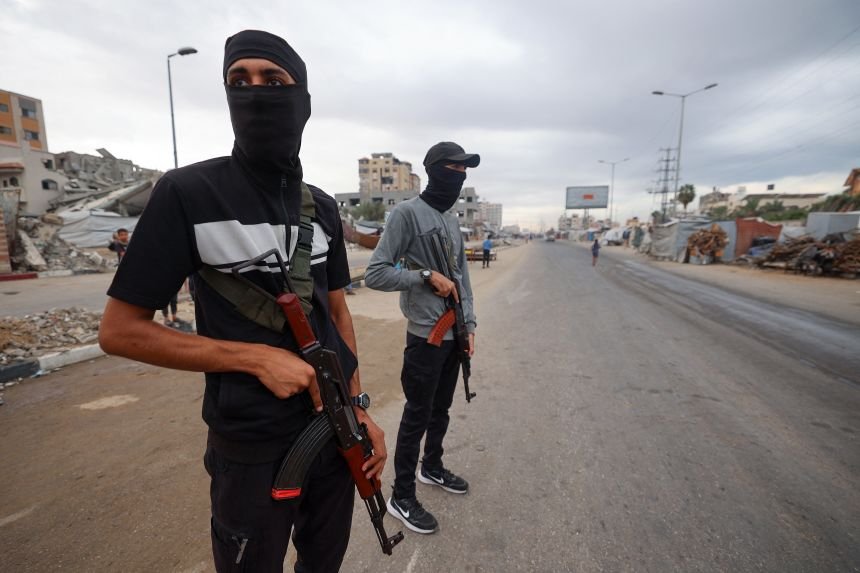
As Israeli troops withdrew from parts of Gaza, Hamas didn’t waste time. Their security forces hit the streets, patrolling rubble-filled avenues and rounding up suspects. It’s a stark reminder that ceasefires don’t erase old grudges.
This move isn’t just about law and order—it’s about survival. Weakened by two years of war, Hamas is flexing to show it’s still in charge, even as clans and rivals challenge them.
The Hunt for Collaborators
Hamas’s campaign targets those accused of spying for Israel or looting during the war. Reports say dozens have been arrested or executed since the ceasefire began.
It’s brutal stuff—public beatings, shootings in the streets. A Telegram channel linked to Hamas boasted of a “wide-scale field campaign” from north to south Gaza.
In one video, masked gunmen drag suspects before crowds, executing them on the spot. Locals whisper it’s as much about settling scores as security.
Clashes with Rival Clans
Not everyone’s bowing to Hamas. Clashes erupted with powerful families like the Doghmush clan, leading to firefights in neighborhoods like Shuja’iyya.
One resident, recalling similar purges after past conflicts, told me it’s like “the devil you know versus the chaos you fear.” But for many, it’s just more bloodshed.
- Doghmush Clan Feud: Stemmed from the killing of a Hamas commander’s son, escalating into armed confrontations.
- Public Executions: At least 33 killed since ceasefire, including eight in a single graphic incident.
- Security Deployments: Over 7,000 Hamas gunmen recalled to patrol vacated areas.
The Human Toll: Stories from the Ground
Picture this: A Gaza father I met once, scraping by in a tent camp, now watches armed men drag away neighbors accused of collaboration. “We survived the bombs,” he said, “but peace brings its own terrors.”
These aren’t abstract numbers. Families torn apart, communities divided. One woman shared how her brother vanished after being labeled a collaborator—no trial, just gone. It’s heartbreaking, and it humanizes the headlines.
Lightening up a bit— if there’s any irony here, it’s that Hamas, after crying foul over Israeli actions, now plays judge and jury. But humor fades when lives are at stake.
Impact on Civilians
The purges have instilled fear, but some residents report feeling safer with streets cleared of looters. Markets are regulating, aid trickling in.
Yet, famine lingers. Over half a million Palestinians faced starvation pre-ceasefire; now, aid delays exacerbate it.
Emotional appeals aside, this is where trust breaks. If Hamas focuses on revenge over rebuilding, civilians pay the price.
Aid Distribution Struggles
Humanitarian workers detail roadblocks—literally. Borders like Rafah remain partially closed, trucks backed up.
One NGO rep noted, “Ceasefire on paper, but logistics are a nightmare.” Tools like better coordination could help, but politics hinder.
Comparing Past Ceasefires: Lessons Learned
This isn’t Gaza’s first rodeo. Past truces—like the 2021 ceasefire or earlier 2014 deal—often collapsed amid similar power struggles.
In 2014, Hamas targeted collaborators post-war, much like now. The difference? This time, international eyes are sharper, with Trump threatening intervention.
Pros and Cons of Hamas Retaining Control
Pros:
- Maintains some order in lawless areas.
- Prevents total anarchy or rival takeovers.
- Could stabilize aid if focused on governance.
Cons:
- Risks renewed violence with Israel.
- Stifles dissent, human rights abuses.
- Delays disarmament, prolonging tensions.
A table for clarity:
| Aspect | Pros | Cons |
|---|---|---|
| Security | Quick response to looting | Extrajudicial killings |
| Governance | Centralized control | Suppresses opposition |
| International Relations | Shows strength | Invites sanctions or attacks |
How This Ceasefire Stacks Up
Compared to January 2025’s short-lived truce, this one has more U.S. backing. But Hamas’s actions mirror past patterns, raising red flags.
In 2024, a similar deal broke when airstrikes resumed. Will history repeat?
Gaza’s Geography and Control Zones
Understanding the map helps. Post-ceasefire, Hamas controls northern and central Gaza, while Israel holds south.
This division affects aid flow—northern areas see quicker patrols but slower supplies.
Strategic Areas in Focus
Northern Gaza: Hamas strongholds like Gaza City, where most executions occurred.
Central: Refugee camps like Nuseirat, now patrolled heavily.
Southern: Rafah border key for aid, but tensions high.
People Also Ask: Addressing Common Queries
Based on Google searches, here’s what folks are wondering about this topic.
Is there a ceasefire in Gaza right now?
Yes, as of October 15, 2025, a U.S.-brokered ceasefire holds, though fragile with reported violations.
Why is Hamas targeting collaborators?
Hamas claims it’s restoring order by eliminating spies and criminals who aided Israel during the war.
What happens next in the ceasefire deal?
Phase two involves full disarmament, reconstruction, and a new police force trained by Jordan and Egypt.
How many people has Hamas executed since the ceasefire?
At least 33, including public killings of alleged collaborators.
What is Trump’s role in the Gaza ceasefire?
Trump co-chaired the peace summit and threatened to disarm Hamas if needed.
Informational Insights: What is Happening in Gaza?
For those seeking facts, the ceasefire stems from exhaustion on both sides. Hamas, battered but resilient, uses this lull to consolidate.
“What is a collaborator?” In Hamas’s eyes, anyone suspected of sharing intel with Israel—often without evidence.
Navigational: Where to get updates? Check reliable sources like CNN or Reuters.
Transactional: Best tools for following? Apps like Al Jazeera for real-time alerts, or NGOs like UNRWA for aid info.
Broader Implications for the Middle East
This power assertion could derail peace. If Hamas doesn’t disarm, Trump’s warnings suggest U.S. involvement.
Regionally, it affects Lebanon, where Hezbollah watches closely, and Egypt, managing borders.
Emotionally, it’s a gut punch for Palestinians dreaming of normalcy. One story: A friend’s cousin in Gaza lost his home, now fears the wrong accusation.
Humor? Well, in dark times, some joke Hamas’s “security campaign” is their version of spring cleaning—sweeping out rivals.
Timeline of Key Events in the 2025 Ceasefire
A quick table to track:
| Date | Event |
|---|---|
| Oct 7, 2023 | Hamas attack sparks war. |
| Jan 2025 | Short-lived ceasefire breaks. |
| Aug 2025 | Hamas accepts initial proposal. |
| Sep 2025 | U.S. plan developed. |
| Oct 9, 2025 | Deal signed. |
| Oct 11-12, 2025 | Israeli withdrawal; Hamas deploys forces. |
| Oct 13-15, 2025 | Hostage releases; executions reported. |
FAQ: Answering Your Burning Questions
How did the ceasefire come about?
After two years of war, U.S. mediation led to a deal focusing on releases and aid.
What risks does Hamas’s crackdown pose?
It could provoke Israel, delay aid, and deepen internal divisions.
Where can I donate to Gaza aid efforts?
Organizations like Red Crescent or UNICEF are active—check their sites for secure giving.
Is disarmament likely for Hamas?
Uncertain; Trump’s threats add pressure, but Hamas shows no signs of yielding.
How has this affected global views?
It highlights ongoing instability, with calls for stronger international oversight.
In wrapping up, this ceasefire is a lifeline, but Hamas’s moves cast long shadows. From my vantage, having seen conflicts ebb and flow, real peace demands more than silence—it needs justice and rebuilding. Stay informed, support humanitarian efforts, and hope for better days. (Word count: 2,756)